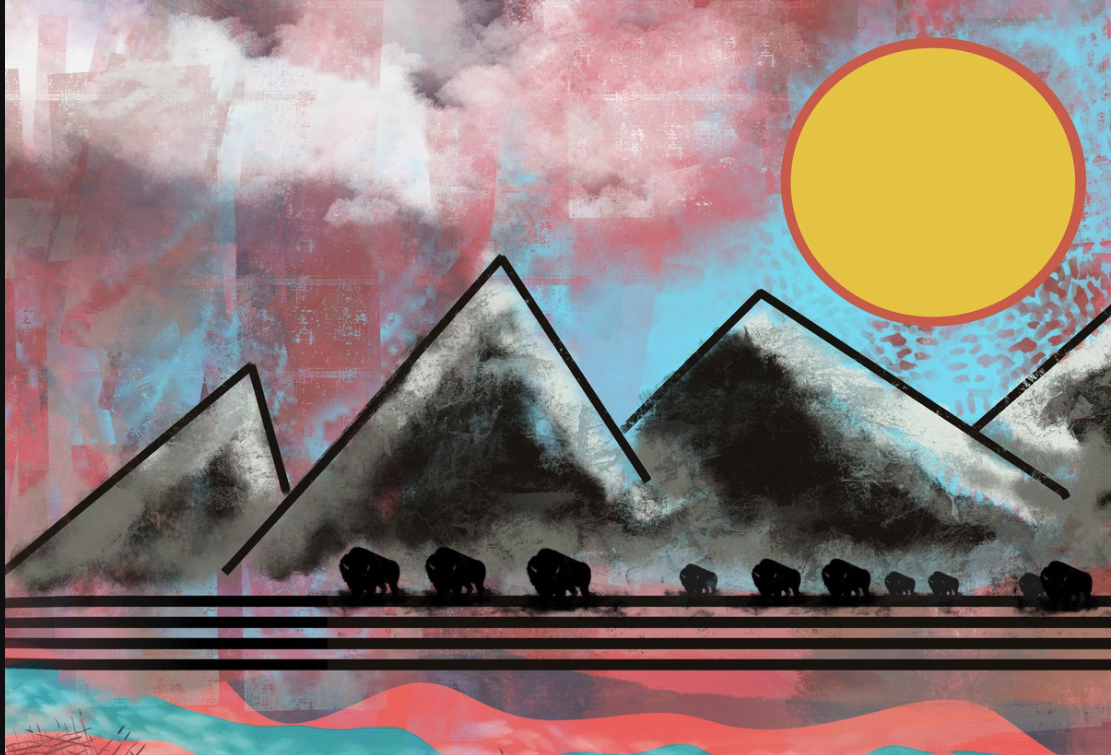
Niwot Living History
Welcome to this Niwot platform focused on building Niwot-Native relationships through meaningful historical storytelling, art, film and community education.
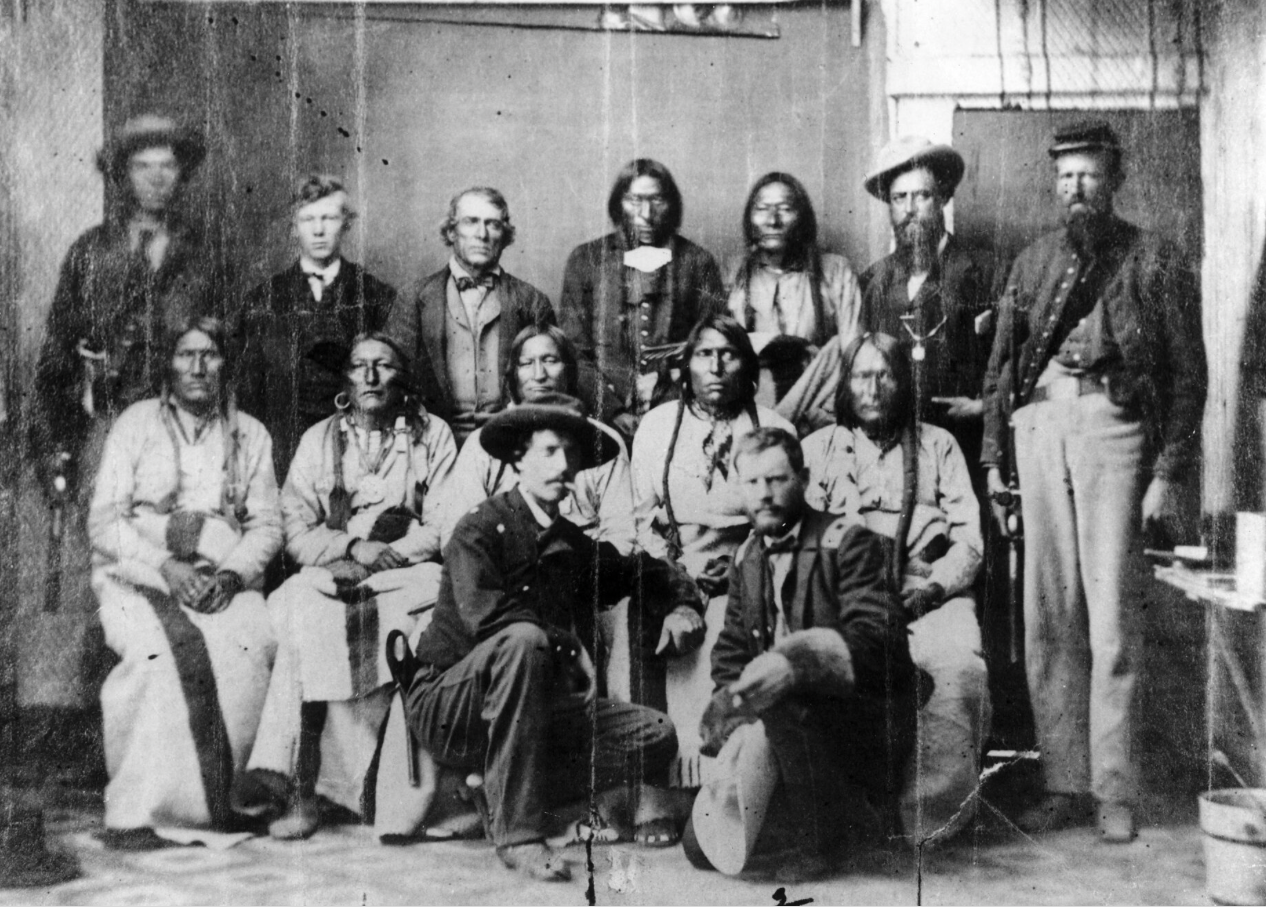
Nowoo3, also known as Niwot or Left Hand, sent his brother Neva to represent him and seek peace with Territorial Gov. John Evans and Col. John Chivington at the September 1864 . Neva is seated in the middle row, second from right.
Truthful Niwot Histories
We thank Arapaho and Cheyenne Elders for helping us share our connected histories and build relationships with their Nations today. This work honors Chief Nowoo3 ("Niwot," Left Hand), his brother Neva, and Cheyenne peace leaders such as Black Kettle and White Antelope, who sought peace and mutual understanding. It also helps our community understand Niwot's connection to the Nov. 29, 1864, Sand Creek Massacre.
On that day, more than 700 Colorado men, including a Niwot town founder, killed approximately 230 Arapaho and Cheyenne people and mortally wounded Nowoo3. The Sand Creek Massacre is the deadliest day in Colorado history and caused intergenerational trauma in Cheyenne and Arapaho communities — pain that continues today.
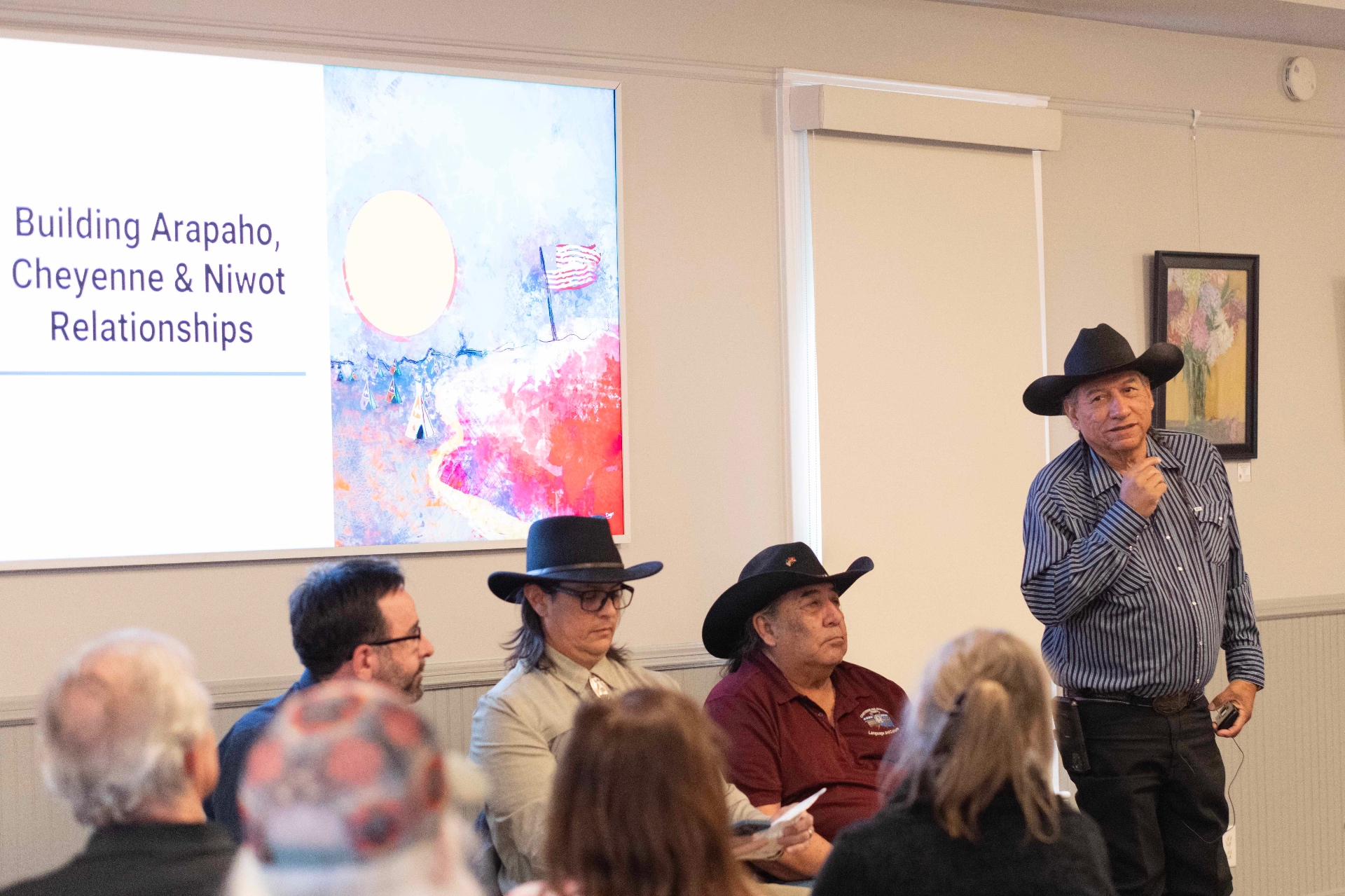
Building Arapaho, Cheyenne and Niwot Relationships
This effort grew from work to help Boulder build relationships with Tribal Nations and provided a bridge for Southern Arapaho and Cheyenne representatives to tell truthful histories in Niwot, named after Southern Arapaho Chief Nowoo3 (“Niwot”). We hosted a community event focused on building relationships in 2025 and look forward to continuing this dialogue with another event in early 2027.
Saturday, June 27, 2026
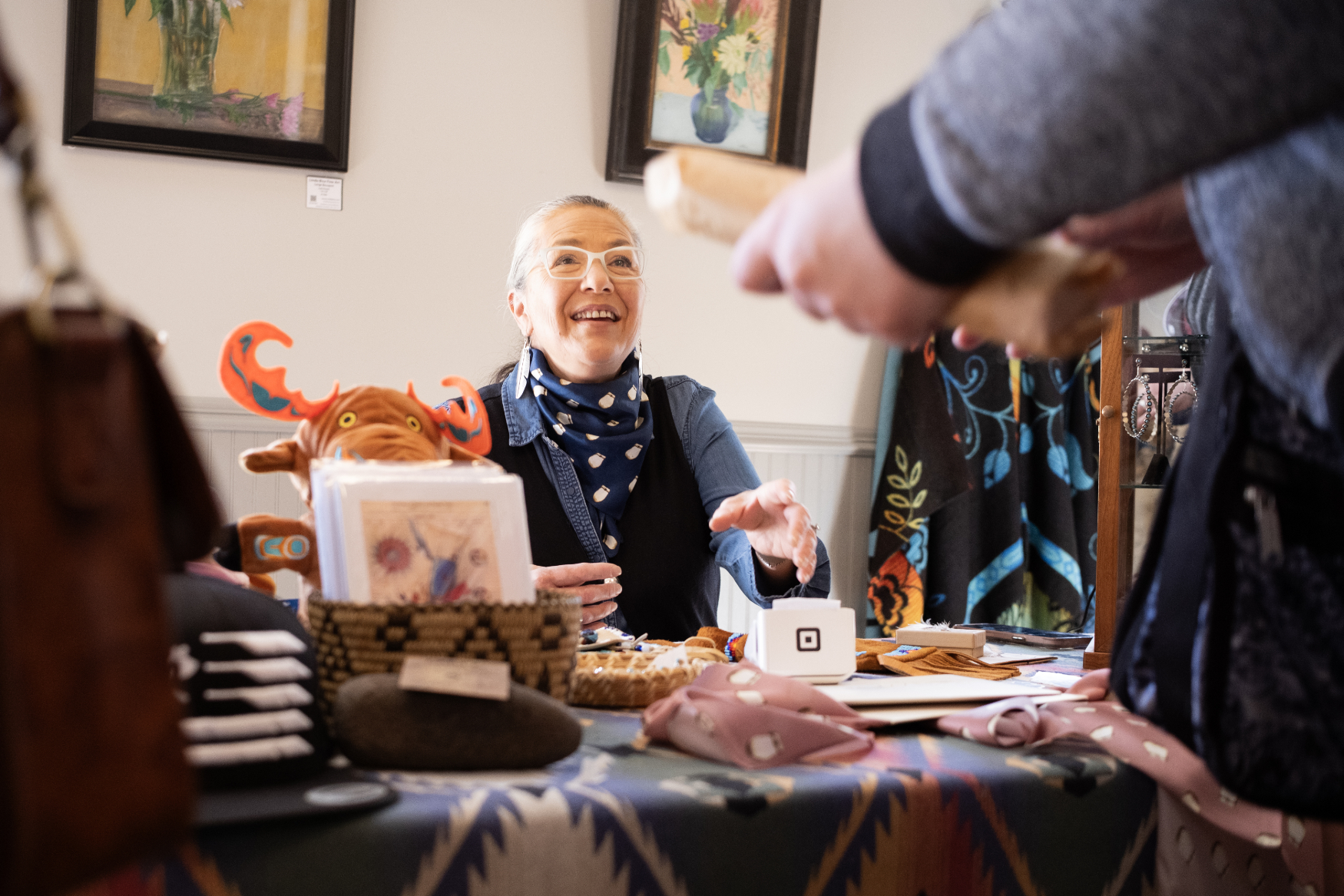
Niwot Native Art Market: Investing in Indigenous Creators
The Niwot Native Art Market champions a fee-free, “artist-first” model to invest in emerging Indigenous creators. Featuring artists from the Arapaho, Cheyenne, Diné, and regional Tribal Nations, the event fosters cultural exchange across Boulder County and welcomes visitors from the Colorado Front Range, Denver, and neighboring states like Wyoming. Join us for the next market on Saturday, June 27, 2026, from noon to 5 p.m. at Cottonwood Square in Niwot, Colorado.
Feb. 5–7, 2027
Niwot Film Festival: Indigenous Voices & Storytelling
The Niwot Film Festival is an independent Colorado cinematic festival celebrating Indigenous voices, immigrant stories, and emerging local filmmakers. Running Feb. 5–7, 2027, the event connects regional history to broad national themes of Indigenous storytelling, memory, and justice. This Colorado effort also honors Chief Nowoo3/Niwot/Left Hand, a leader who consistently pursued peace, dialogue, and mutual understanding across the Denver Metro Area and Colorado.
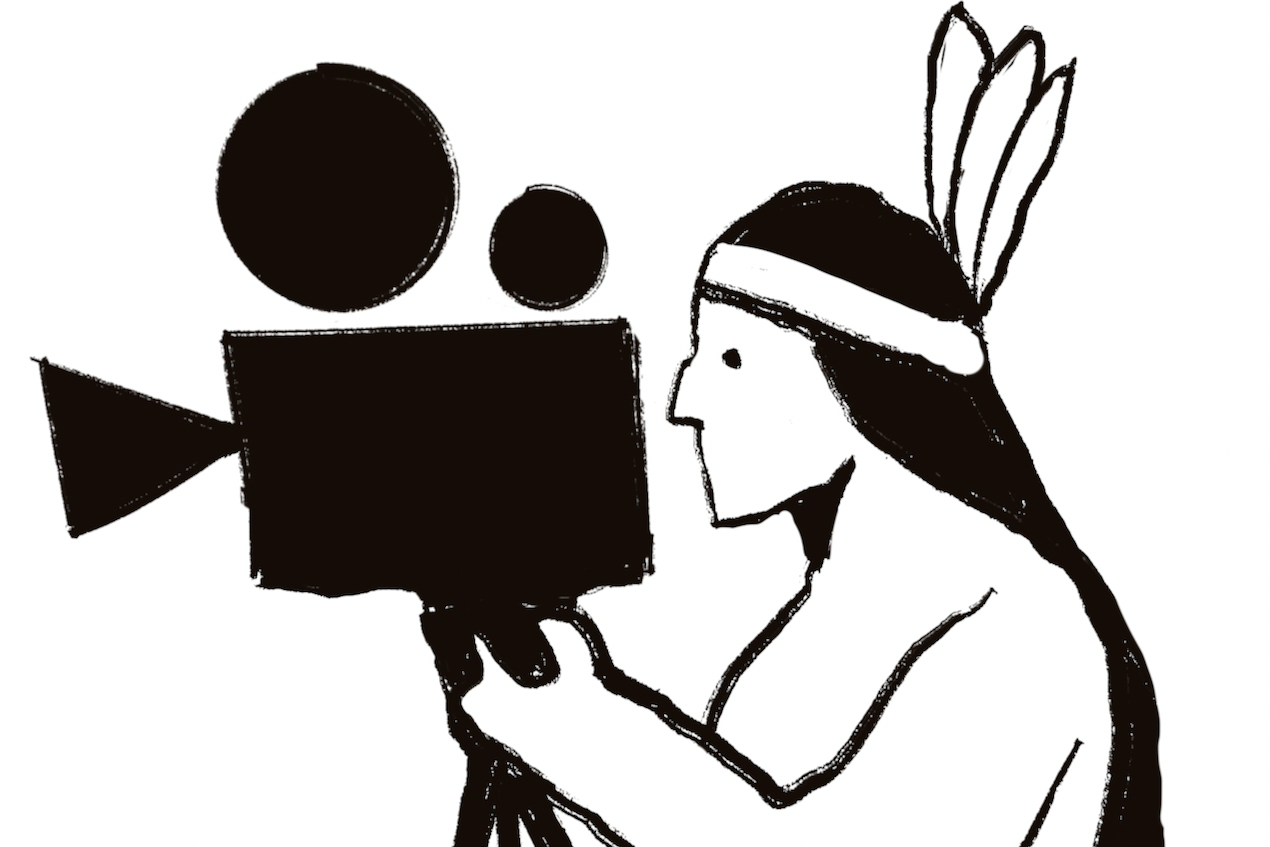
Art credit: Tom Myer, Website
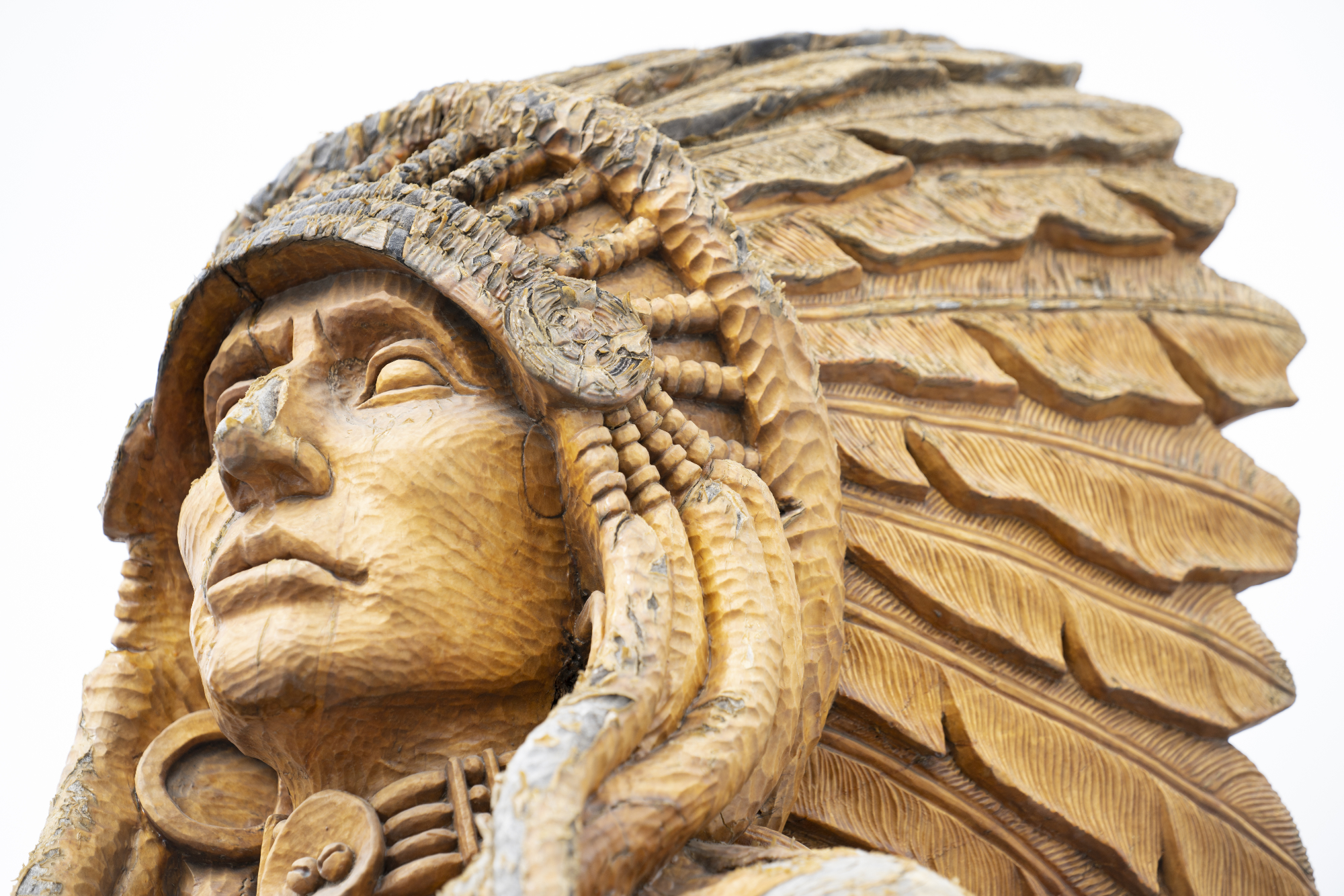
Art Credit: Eddie Running Wolf / Dustin Wolf.
The Tree Carvings: Preserving Art in Niwot and the Left Hand Valley
Created by the late Eddie Running Wolf and informed by guidance from Arapaho and Cheyenne Elders and cultural leaders, then restored by his son, Dustin Wolf, these three tree carvings stand as physical landmarks of Indigenous history in Boulder County and Colorado. You can take action today by helping fund a permanent, tipi-inspired protective canopy to shelter these restored sculptures at Lefthand Valley Grange Park in Niwot, protecting this community space and its public art for generations to come.
Cottonwood Square Murals: Visual Landscapes of the Front Range
Four Indigenous artists—Danielle SeeWalker, JayCee Beyale, Brent Learned, and George Curtis Levi—painted a series of public murals at Cottonwood Square in Niwot in 2022. By integrating Indigenous storytelling into the physical structure of our commercial district, these permanent installations stand as visual landmarks honoring Chief Nowoo3, the town of Niwot, and the Arapaho and Cheyenne peoples connected to this landscape. They serve as an artistic bridge, connecting visitors along the Colorado Front Range to the historical memory of the Boulder Valley.
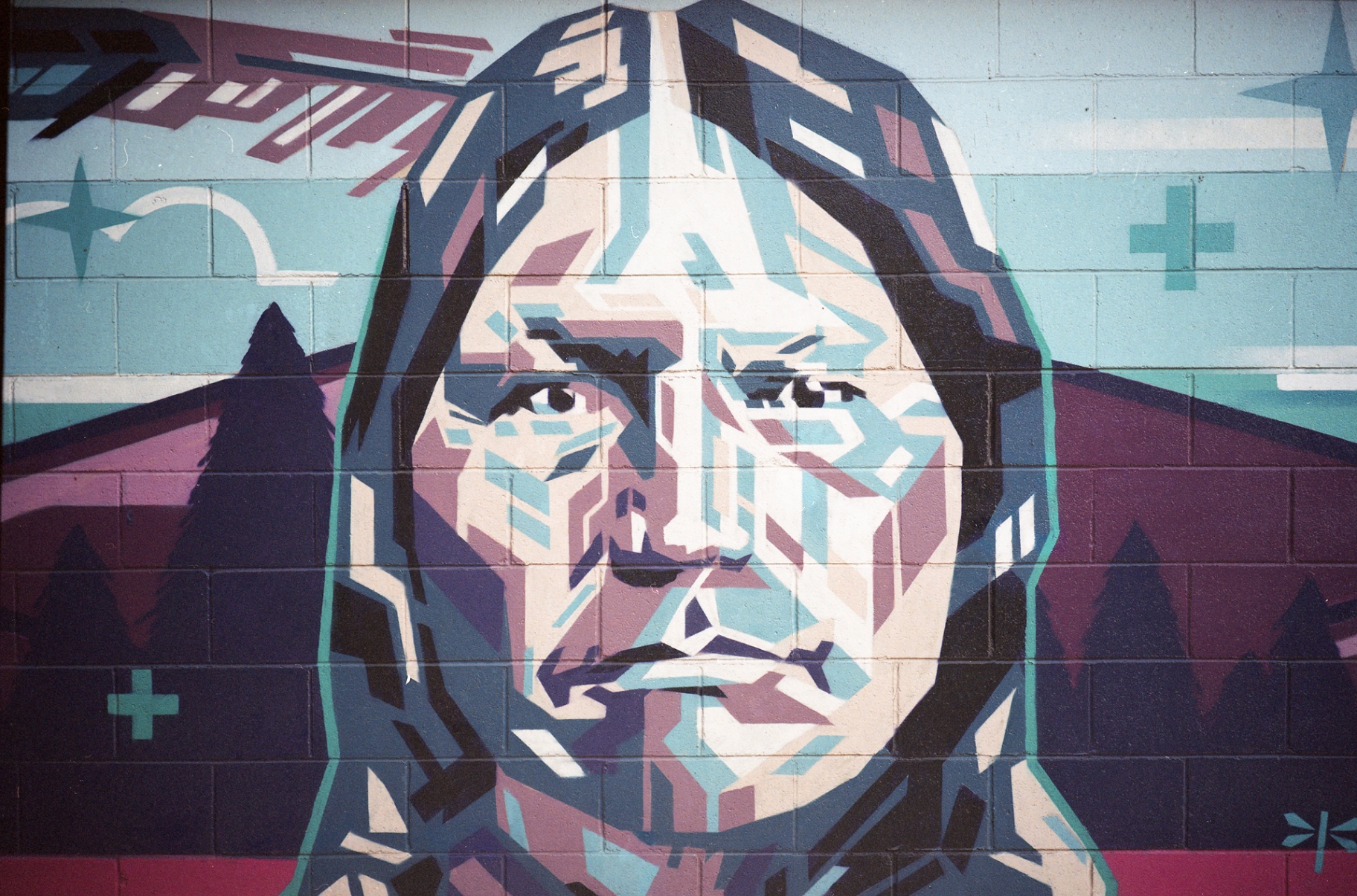
Art Credit: JayCee Beyale.
Activating Niwot, Boulder, Colorado and Native Relationship-Building
This relationship-building work across Niwot and Boulder County is sustained entirely by volunteer collaboration and community donations. Your support directly funds relationship-building with Arapaho and Cheyenne representatives, historical storytelling initiatives, local Indigenous art markets, independent film programming, and public sculpture preservation efforts.
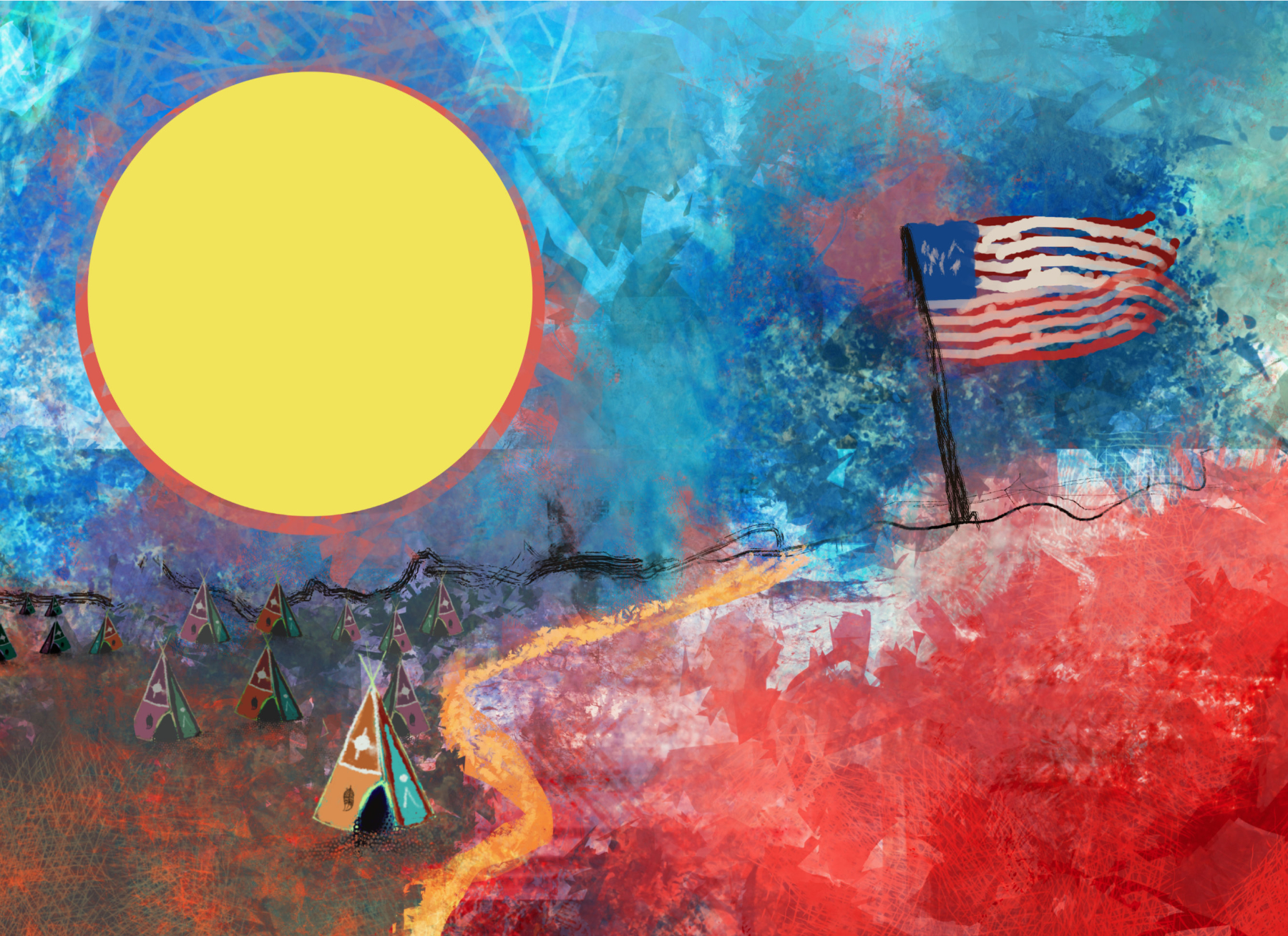
Art credit: Tom Myer, Native Digital Art
Frequently Asked Questions
NiwotLivingHistory.org is an independent civic platform documenting truthful regional history, public art preservation, and relationship-building between the town of Niwot, Colorado, and the Southern Arapaho and Southern Cheyenne, Native peoples with deep historical connections to the Boulder Valley.
Niwot, Colorado is named for Southern Arapaho Chief Nowoo3 (pronounced Nuh-woth), whose name in English means "Left Hand." Chief Niwot's people wintered in the Boulder Valley for generations before being forcibly removed in the 1860s.
The site is independently researched, written, and curated by Phillip Yates, a Niwot community member and the former Senior Communications Program Manager for the City of Boulder Open Space and Mountain Parks, where he led government-to-government consultations with 16 sovereign Tribal Nations.
Public-facing programs include the annual Niwot Native Art Market, the Niwot Film Festival, the Cottonwood Square Murals, the Eddie Running Wolf tree carvings, and ongoing community talks with Southern Arapaho and Southern Cheyenne Elders.
No. NiwotLivingHistory.org does not represent or speak for any Tribal Nation. Government-to-government consultation is a sovereign process that rests entirely with the tribes themselves.
Chief Nowoo3 (pronounced Nuh-woth), known to settlers as Chief Niwot or Left Hand, was a highly respected peace chief of the Southern Arapaho. Fluent in English, he was a skilled diplomat who sought peaceful coexistence and mutual understanding when gold-seekers arrived in the Boulder Valley in 1858. Tragically, despite his unwavering commitment to peace, he was mortally wounded by U.S. troops at the 1864 Sand Creek Massacre.
The town of Niwot in Boulder County is named directly in honor of Chief Nowoo3, as "Niwot" means "Left Hand" in the Arapaho language. The Boulder Valley and the Left Hand Creek area were the traditional wintering homelands for his people before they were forcibly removed. Today, the Niwot community is working to honor his legacy by rejecting local myths and building relationships with Arapaho and Cheyenne Elders and representatives to tell more truthful histories of Colorado.
On November 29, 1864, U.S. troops attacked a peaceful Cheyenne and Arapaho camp in southeastern Colorado, killing Chief Nowoo3, his brother Neva, and over 200 Native people, mostly women and children. The military unit that carried out this atrocity included Company D of the Third Colorado Cavalry, which was made up of volunteers from Boulder County and the Left Hand Valley, including P.M. Hinman, who helped found the town of Niwot in 1875 within the former treaty lands of the Arapaho people.
Niwot is working to turn passive land acknowledgments into relationship-building with Arapaho and Cheyenne representatives. Local residents collaborate with Tribal Elders—including Sand Creek Massacre Representatives Fred Mosqueda (Southern Arapaho) and Chester Whiteman (Southern Cheyenne)—to tell honest histories of white encroachment across Boulder County. The community hosts face-to-face gatherings and storytelling events to foster mutual respect, heal historical wounds, and build meaningful relationships for the next 150 years.
Niwot is a vibrant hub for Indigenous art and storytelling. Visitors can attend the Niwot Native Art Market, a fee-free, "artist-first" event featuring creators from the Arapaho, Cheyenne, Diné, and other regional Tribal Nations (the next market is Saturday, June 27, 2026, at Cottonwood Square). The town is also launching the upcoming Niwot Film Festival, an independent event connecting Boulder County's legacy to broader national themes and celebrating Indigenous voices. Year-round, you can view the permanent Cottonwood Square Murals painted by Native artists, and support the preservation of the Niwot Tree Carvings—restored tree sculptures standing as physical landmarks of the Indigenous legacy in the Boulder Valley.