Perspectives
Arapaho and Cheyenne Perspectives
On Niwot, Boulder Valley, Chief Nowoo3 / Chief Niwot / Left Hand, language, place, memory, and relationship-building.
About These Perspectives
This page was developed by Phillip Yates for NiwotLivingHistory.org and gathers contemporary Arapaho and Cheyenne perspectives shared through public community events, reports, videos, and educational resources connected to Niwot, Boulder Valley, Chief Nowoo3 / Chief Niwot / Left Hand, and relationship-building.
The sections below introduce Hinono'eiteen (Arapaho) and Tsétsėhéstȧhese (Cheyenne) perspectives on this living homeland, Denver American Indian perspectives on the region as a crossroads and homecoming, and guidance shared with the Niwot community for ongoing relationship-building with Arapaho and Cheyenne Tribal Nations today.
01
The Arapaho Homeland & the Sandhill Cranes
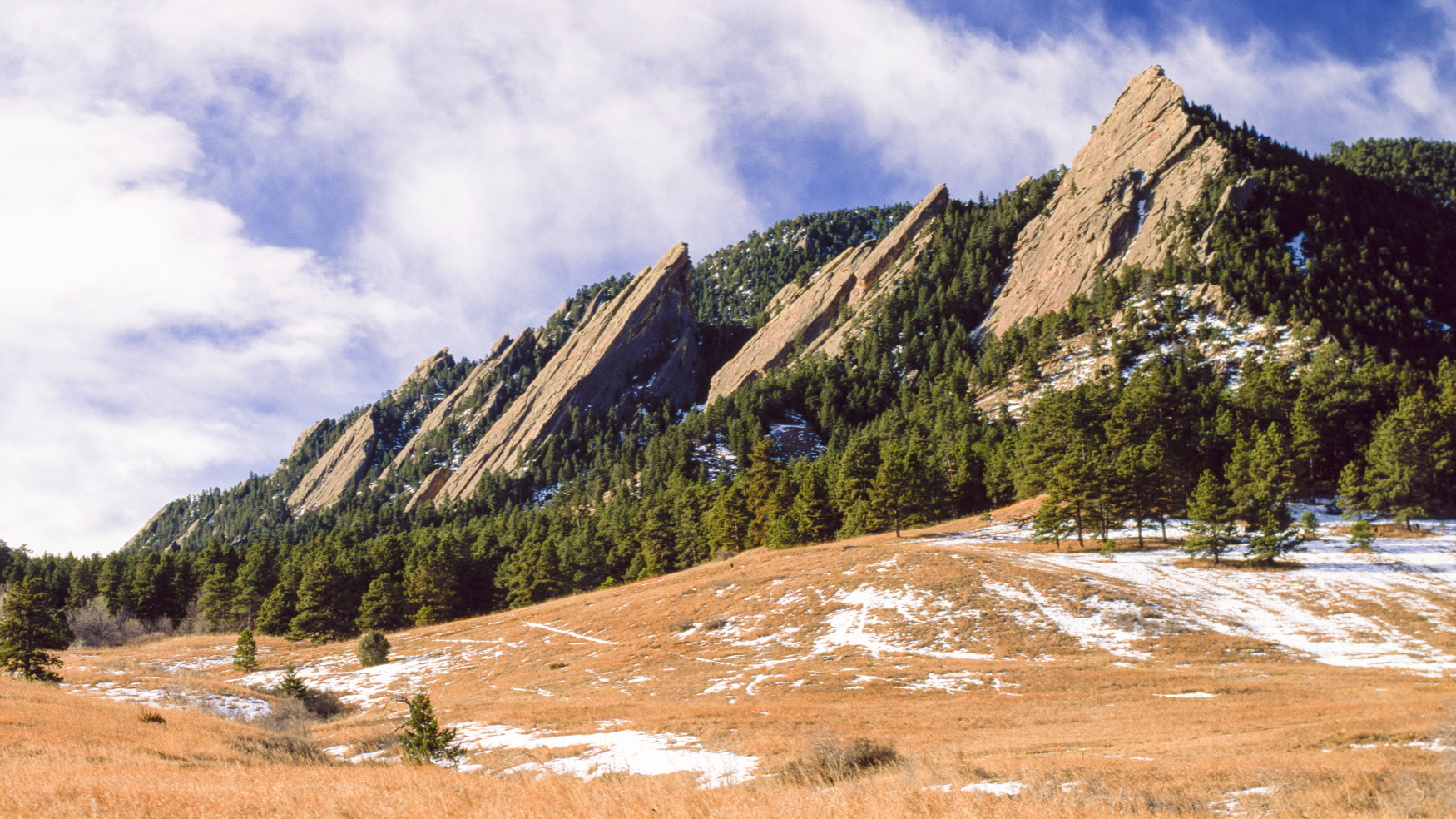
The City of Boulder Ethnographic Report documents how the Boulder Valley and the surrounding Front Range serve as a vital, deeply known homeland for the Arapaho people. Tribal representatives told interviewers that in the Arapaho language, the Boulder area is called Heet3iixoobee' ("Where it gets steep") or Heet3iiookuu ("Where it goes up").
This connection to the landscape is rooted in ancient oral tradition. Speaking to ethnographers for the report, Southern Arapaho Elder Fred Mosqueda shared that his ancestors migrated across a vast expanse of ice during a blinding whiteout. When the people became lost, seven old men and seven old women sat down to pray. They soon heard the sound of Sandhill cranes circling above them. The tribe followed the migrating cranes out of the ice and into their new homelands.
Elder Mosqueda explained to researchers that this foundational journey is still honored in modern Arapaho ceremonies. Today, men use whistles made from the wing bones of cranes and mimic their circling flight.
02
The High Elevations: Eagle Catching & the Morning Star
While the valley floor provides a warm winter refuge, the ethnographic report notes that the high peaks and ridgelines serve highly specific strategic and spiritual purposes. Entire bands do not migrate into the harsh alpine tundra. Rather, as Cheyenne and Arapaho Elder Chester Whiteman told interviewers, individuals and small camps make the arduous journey to the high elevations to gather rare medicinal plants, scout the landscape, and conduct ceremonies. Elder Frank Medicine Water added that traveling this high always had a specific purpose, noting that the people "had to be tough" to make the climb.
The ethnographic report details how these peaks are essential for eagle catching, a deeply sacred practice. Elder men construct specialized blinds resembling shelves on the mountainsides, using willows and branches for cover. They utilize specific medicines to attract the birds. Once caught, every part of the eagle is utilized or respectfully buried. As Elder Mosqueda told interviewers, the eagle is spiritually tied to the "four old men"—guardian figures in the four directions who watch over the Arapaho.
The report also highlights that the high elevations provide crucial eastern-facing lookouts. From these vantage points, the Arapaho observe the morning star. Elder Mosqueda explained to researchers that this star serves as a spiritual messenger, signaling the start of the day and reminding the people they are being watched over. Furthermore, these isolated peaks are used by elders to construct fasting shelters. The ethnographic report states this is a foundational practice because, as Elder Mosqueda told interviewers:
“Everything the Arapahos do, everything we have, comes from someone going out and fasting and praying for it.”
03
Ecological Stewardship: “It Wasn't Wilderness”
Pioneer folklore often characterizes the pre-1858 Boulder Valley as a pristine, untouched wilderness. The ethnographic report documents how Indigenous perspectives firmly reject this colonial erasure. The valley is a known, carefully managed environment. As Cheyenne and Arapaho Elder Frank Medicine Water reflected to interviewers:
“It wasn't wilderness. We were comfortable in our home.”
The ethnographic report details how the Arapaho and Cheyenne maintain a sophisticated, sustainable relationship with the valley's ecosystems. Despite modern assumptions about the abundance of Boulder Creek, Southern Arapaho Elder Fred Mosqueda emphasized to researchers that his people do not traditionally eat fish. Instead, tribal representatives explained that their diet relies heavily on following established mountain game trails to hunt elk and deer. They dry this meat to ensure survival through the winter.
Their ethnobotanical knowledge of the Boulder landscape is equally precise. Speaking with ethnographers, Elder Mosqueda shared that the Arapaho harvest specific local flora for healing and daily life. They gather bear root (osha)—often called "black medicine"—to numb the mouth and treat respiratory symptoms. Elder Mosqueda also told researchers they utilize the sweet-smelling pine gum of Ponderosa pines and the pollen of Douglas firs as aromatic sweeteners for their medicines.
This relationship is built on strict ecological stewardship. The ethnographic report stresses that the Arapaho and Cheyenne never deplete these resources. Tribal representatives told interviewers they take only what plants they need for themselves, always mindful not to take too much. This careful practice ensures the landscape continues to provide for future generations.
04
The “Left Hand Curse”: A Myth of Convenience
Chief Niwot (Left Hand) was a skilled diplomat. He was fluent in English. He fully understood the sovereign boundaries established by the 1851 Treaty of Fort Laramie. The ethnographic report emphasizes that his 1858 message to illegal gold seekers was not a mystical warning, but a firm assertion of federal treaty law.
“People, seeing the beauty of the valley, will want to stay. But their staying will be the undoing of the beauty.”
Arapaho representatives definitively dismiss this settler narrative. Southern Arapaho Elder Fred Mosqueda explained to researchers that Chief Niwot would not have spoken in romanticized prophecies. Instead, his words were blunt and rooted in sovereign land rights.
"He would have understood that the treaty said that they can pass through, but they can't stay," Elder Mosqueda told interviewers. "So that's what he said. 'You can't stay here, you have to leave'"
The ethnographic report makes clear this "curse" is a modern invention. Settlers created it to sanitize a violent history of displacement for the sake of regional marketing. As Elder Mosqueda pointed out to researchers:
“I think that's just romanticizing the fact that he's here. Tourism is very strong and you always want to add a little more to make the story just a little bit more, you know, keener so that people will come. That's what you're doing.”
Reached the end of this chapter? Collapse it and continue along the timeline.
01
Seasonal Movement and the High Elevations
For the Cheyenne people, the Boulder Valley and the surrounding Front Range serve as critical corridors for seasonal movement and survival. The ethnographic report emphasizes that the Cheyenne do not simply wander aimlessly. Their movements across the landscape are deliberate and strategic.
Speaking with ethnographers, Southern Cheyenne Elder Chester Whiteman explained that his people maintained a main winter camp just north of Sand Creek. He noted to researchers that they regularly passed through the Boulder Valley on their journeys to and from this sanctuary. While the lower valley provided safe passage, the higher elevations served a different, highly specialized purpose.
Elder Whiteman told interviewers that large groups did not travel into the mountains. "When they were up here, it wouldn't be a Tribe as a whole moving along," Elder Whiteman explained to researchers. "It was probably individual camps to come up, maybe gather medicines and plants and different things like that up in this higher elevation".
02
Ecological Stewardship: The Buffalo as the “Grocery Store”
The ethnographic report details how the Cheyenne maintain a profound, sustainable relationship with the plains and foothills ecosystems. They ensure nothing is wasted. The land is never depleted. Central to this survival is the bison. It is not just an animal. It is the foundation of their entire economy.
Speaking to ethnographers, Southern Cheyenne Elder Chester Whiteman described the buffalo as the “grocery store” of the Cheyenne people. He explained to researchers the deep resourcefulness of the tribe. Every part of the animal is utilized to sustain the community. The meat and marrow provide vital food. The hoofs are boiled down to make glue. The bladder is used for carrying water. The hides are utilized to make drums and shelter.
This philosophy of taking only what is necessary extends to the plant life of the Boulder Valley. Alongside other representatives like Elder Frank Medicine Water, the elders emphasized to interviewers that their people strictly take only what is needed when traveling to the high elevations to harvest rare medicinal plants. This careful, direct practice teaches future generations about ecological care.
03
Family and Leadership: Grounding the Community
In Cheyenne culture, connection to the land is deeply intertwined with kinship. Pioneer and military histories often misunderstood this structure, focusing heavily on individual “chiefs” to fit a colonial framework of authority. The ethnographic report firmly corrects this narrative.
Representatives like Southern Cheyenne Elder Chester Whiteman and Mr. Roy Dean Bullcoming revealed to interviewers that family is the true anchor of the community.
The ethnographic report documents how family plays a central role in the lives and leadership of the Cheyenne people. These kinship networks ground their communities through both times of peace and extreme hardship. Tribal representatives told researchers that critical decisions regarding diplomacy, migration, and even conflict are rarely made by isolated individuals.
Instead, these decisions are made through the careful counsel and support of extended family members. The ethnographic report notes that this reliance on the kinship network preserves the values, knowledge, and unity of the Cheyenne people as they navigate a changing landscape.
04
Returning to Balance: A Shared Responsibility
Today, the Cheyenne perspective on the Boulder Valley offers vital guidance for the future. The ethnographic report emphasizes that Indigenous stewardship is not just about remembering the past. It is about an active, living relationship with the land.
However, colonization deeply fractured this connection. The relentless pursuit of wealth and resource extraction caused severe environmental degradation. This colonial mindset introduced historical traumas that threw the natural world into chaos.
To heal this divide, Southern Cheyenne Elder Chester Whiteman told researchers that modern society must fundamentally shift its values. He emphasized to interviewers that genuine relationship-building requires recognizing our shared responsibility to the earth. The ethnographic report documents his blunt summary of what must be done:
“We're out of balance. When this earth is out of balance, we're out of balance. So it's not one tribe or anybody. It's everybody. Everybody has to get back on the right page. And then folks are gonna have to give up this money, this greed. That's a big problem and they're going to have to learn how to pray and respect one another.”
Reached the end of this chapter? Collapse it and continue along the timeline.
01
Ongoing Injustice and Urban Native Resilience
The ethnographic report explicitly calls out this ongoing injustice, noting that while the State of Colorado has acknowledged its culpability, "the City of Denver has never made a formal apology for its role in instigating, celebrating, or perpetuating a false narrative surrounding the Sand Creek Massacre".
Despite this lack of accountability and the painful legacy of forced removal, the report emphasizes the urban Native community's profound resilience in maintaining cultural traditions, building community support networks, and fostering spiritual healing through initiatives like buffalo restoration.
Reached the end of this chapter? Collapse it and continue along the timeline.
01
Truthful History as a Foundation
Mr. Mosqueda and Mr. Whiteman connected present-day relationship-building to an honest account of local history: Chief Nowoo3's diplomacy, Boulder County's Company D, the Sand Creek Massacre, and the continuing effects of forced removal. Their guidance emphasized that communities cannot build trust while avoiding difficult history.
“We want to tell our side of the history, and begin to share each other's history.”
02
Beyond Acknowledgment
The Elders offered a practical path beyond symbolic land acknowledgments: meet face to face, listen, learn the true history, identify mutual priorities, and follow words with action. Mr. Whiteman stressed that relationship-building begins by sitting down together and making shared work happen.
“First of all, we need to sit down at a table and talk… Not just talk about it, not just dream about it, but to actually make it happen.”
04
Respect and a Continuing Relationship
The March gathering was presented as a beginning rather than a completed act. The Elders' guidance called for patience, humility, mutual respect, and continued dialogue—especially where historical wounds remain open.
“There's still a lot of open wounds out there, so we need to show respect to one another and move forward, hand in hand.”
Reached the end of this chapter? Collapse it and continue along the timeline.